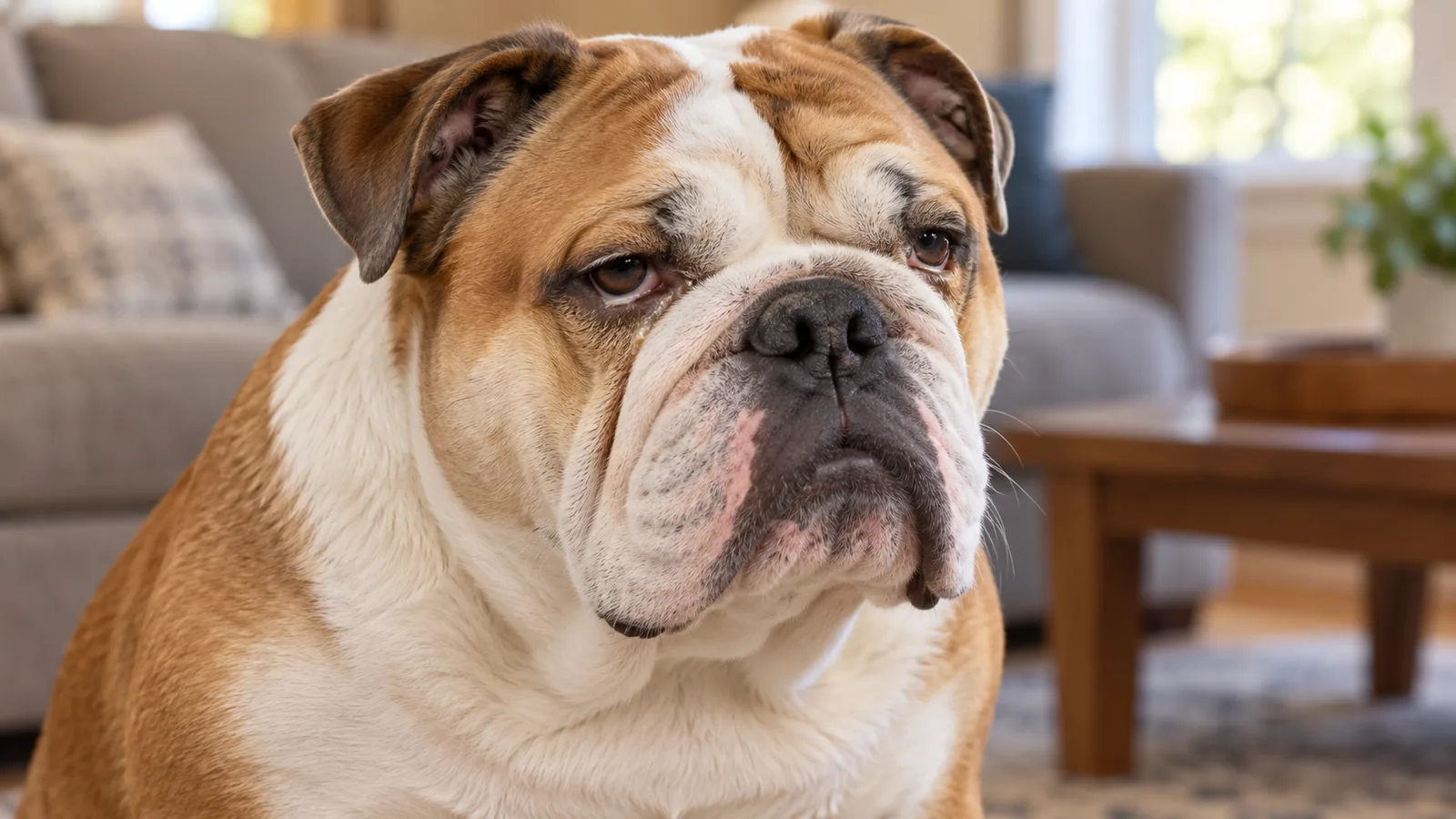
Entropion, the eyelid that rolls inward, shows up most in breeds built with loose facial skin or heavy brows: Shar-Peis, Chow Chows, Bulldogs, Mastiffs, Rottweilers, and Great Danes, plus flat-faced cats like Persians and Himalayans. Ectropion, the lid that sags outward, runs with the naturally droopy lower lids of Bloodhounds, Basset Hounds, Saint Bernards, Cocker Spaniels, and Newfoundlands. A few breeds, Great Danes and Saint Bernards among them, can manage both at once. Breed is not the whole story though, since age-related tissue changes, old injuries, and chronic irritation can roll or sag a lid in any dog or cat, and surgery is the fix when the lid position itself is what keeps hurting the eye.
If your pet is on that list, the eye is the thing to watch, not the pedigree. Animal Hospital Southwest in Fort Worth can check the lid position, look at the surface of the eye for damage, and tell you whether this calls for medication, a temporary tack, or surgical correction. Our AAHA-accredited team has been at this for over 40 years, so you will hear honestly what your pet's lids need and what they do not. If the eye looks squinty, weepy, or just different than it used to, book an eye exam and we will sort it out.
Why a Rubbing Eyelid Needs Fixing, Not Watching
- Entropion rolls the eyelid inward so lashes and hair scrape the cornea with every blink. Ectropion sags the lid outward, leaving the surface exposed and drying.
- Loose facial skin, heavy brows, flat faces, and droopy lower lids carry the most risk, though injury, age, and pain-driven squinting can roll a lid in any dog or cat.
- Squinting, pawing at the face, and discharge that keeps coming back mean the eye hurts, and a rubbed cornea can scar permanently.
- A few temporary stitches can hold a growing puppy's lid in place, and permanent surgery is the lasting fix once the face stops changing shape.
What's the Difference Between Entropion and Ectropion?
Entropion rolls the lid inward so lashes, hair, and lid skin drag across the cornea with every blink, while ectropion droops the lower lid outward and leaves the pink inner lid and the eye surface exposed to the dust and wind a Fort Worth spring kicks up.
| Feature | Entropion | Ectropion |
| Lid position | Rolls inward, toward the eye | Sags outward, away from the eye |
| What touches the cornea | Lashes, facial hair, and lid skin, every blink | Nothing touches it, but nothing shields it either |
| What you notice | Squinting, heavy tearing, a lid that looks tucked under | Visible pink inner lid, droopy lower lid, debris in the pocket |
| Left untreated | Corneal ulcers, pigment and scarring that cloud the surface, vision loss at worst | Chronic irritation, repeat conjunctivitis and infections, a dry, exposed surface |
| Direction of repair | Remove a measured piece of skin so the lid rolls back out | Tighten or shorten the lid so it meets the eye again |
Some dogs have both in one eye, the middle of the lower lid sagging while the corners roll in. That combination is called a diamond eye, and the repair has to address both halves. Low tear production can layer on top, so correcting only the lid leaves a pet with dry eye still uncomfortable.
Is This Something My Pet's Breed Is Prone To?
Breed matters because facial shape does, and eyelid disorders usually come back to how much loose skin hangs around the eye, how deep the socket sits, and how the lid margins meet. That's why the same rolled-in lid turns up again and again in a short list of breeds, and why two dogs of the same breed can still need very different repairs.
- Loose skin and heavy brows: Shar-Peis, Chow Chows, Bulldogs, Mastiffs, and Rottweilers carry enough facial skin to roll a lid inward on weight alone. Hereditary eyelid conditions run in family lines, so a parent or littermate with the same rolled-in lid is a clue.
- Flat faces: Cats aren't exempt. Flat-faced breeds like Persians, Himalayans, and Exotic Shorthairs have shortened faces and shallow eye sockets that change where the lid sits and how tears drain, and Pugs and Pekingese have the same problem with face shape.
- Droopy lower lids: Bloodhounds, Basset Hounds, Saint Bernards, Cocker Spaniels, and Newfoundlands are bred for a loose lower lid, and in some individuals it sags far enough to stop protecting the eye.
Plenty of mixed breeds and domestic shorthairs need a repair too. Tissue around the eye loses tone with age, so a senior care exam includes a close look at lid position. Scars from an old scrap or a branch can pull a lid out of place as they heal, and chronic inflammation does the same thing slowly. Pain can do it in an afternoon: a sore eye gets squeezed shut hard enough to roll the lid in, which rubs and hurts more. That one is called spastic entropion, and it often unrolls once the pain is treated.
Why Does My Pet Keep Squinting and Rubbing Their Eye?
Squinting, pawing at the face, a lid held halfway shut, and sudden light sensitivity are signs of eye pain, not a cosmetic quirk to live with. Cats are quieter about it and may simply hold the eye half shut and duck away from a hand on that side of the face.
What families notice first:
- One eye that looks different: smaller, more closed, or sitting differently than the other.
- Tear staining: a wet streak that keeps coming back and darkens the fur below the eye.
- Thick discharge: eye discharge that turns from clear tearing to yellow or green mucus means the surface is irritated or a secondary infection has set in.
- A dull or cloudy patch: lashes and hair dragging across the cornea wear the surface into corneal ulcers that can scar, deepen, and at worst threaten the eye itself.
- Face-shy behavior: ducking away from your hand, or rubbing the eye on the furniture.
Never put leftover steroid eye ointment on a squinting eye: if there's an ulcer underneath, a steroid can make it deeper and far more dangerous. Human redness-relief drops don't belong in a pet's eye either, and don't take scissors to the lashes yourself.
An eye held shut, cloudy, or clearly sore needs urgent care the same day, so call ahead and we'll be ready for you. If it starts after we've closed, an emergency hospital should look at it that night rather than waiting for our next open morning, because the pigment and scar tissue that build up while a lid rubs don't come off later.
What Can Be Done About a Rolled or Sagging Lid?
Treatment runs from lubricating ointment and watchful waiting, to a few temporary stitches, to a permanent repair that reshapes the lid. Which one fits depends on your pet's age, the lid's position, and the state of the cornea, and most of that gets settled at the exam before anyone schedules anesthesia.
What Does the Exam Need to Settle First?
The exam starts with watching the eye at rest, before anyone touches it, and a few quick eye tests answer most of the question: a tear production strip, fluorescein stain to light up scratches and ulcers, and a pressure reading inside the eye to rule out glaucoma. Then a few findings decide the plan:
- The numbing drop: a topical anesthetic takes the soreness out for a few minutes. If the lid rolls back out on its own once it stops hurting, the problem is spastic rather than structural, and the treatment changes completely.
- The lid margin and lashes: extra lashes growing from the edge of the lid, or hairs on the inner surface, can scrape a cornea even when lid position looks normal.
- The rest of the eye: dry eye, glaucoma, and a plain scratch all cause squinting too, and the stain and the pressure findings separate them.
Does a Growing Puppy Need Permanent Surgery Right Away?
A growing puppy often doesn't need permanent surgery yet, because temporary eyelid tacking uses a few small sutures to roll the lid back out for several weeks, long enough for the face to grow into itself or for a painful squint to settle, and it can be repeated if needed. Kittens occasionally need the same thing, and permanent correction stays available later. A tacked lid gets rechecked while the face changes, so call us if the squint comes back before those stitches are due out.
What Does Permanent Eyelid Surgery Involve?
Permanent repair reshapes the lid so it sits where it belongs, and it's the lasting answer once the problem is clearly structural and the face has finished growing. The judgment call in eyelid surgery is how much tissue to remove, since taking too much trades a rolled-in lid for a sagging one, so we take a conservative amount on purpose.
The technique depends on the species, which lid is involved, and how the margin is shaped, and our veterinarians weigh the margin, the loose skin, and the cornea together before choosing one. We provide many routine and complex surgeries at Animal Hospital Southwest, and we'll let you know if your pet's eyelid repair is one we'd do here or one best handled by a boarded ophthalmologist.
How Does a Cat's Rolled Lid Change the Plan?
Entropion in cats tends to show up later in life and often travels with chronic surface disease, so the plan has to treat the lid and the eye surface together. A senior cat with a rolled lower lid may also be carrying long-standing conjunctivitis, scarring from an old herpesvirus flare, or a cornea that never fully healed, so a full eye workup comes first.
Will Eyelid Surgery Fix the Problem for Good?
Eyelid surgery has a high success rate, and many pets who have squinted for months blink normally once the swelling eases. What the repair can't do is erase scarring already on the cornea, though it does stop new damage from piling on top of it. Once the face has finished growing, the lid usually stays where it's put.
A few things shape the result:
- The lid and the cornea: a lid rolled slightly at one corner is a different job from one tucked under along its whole length, and a clear surface carries the best outlook.
- Whether the face has finished growing: work on a mature face holds better than work on a nine-month-old Mastiff who's still changing shape.
- Home care through recovery: the cone and the medication schedule do as much for the outcome as the procedure itself.
A small revision later isn't a failure. It's most likely in a young dog whose face is still filling out, or a Shar-Pei with more skin than the first repair accounted for.
If your dog is shown in conformation, check your breed club's and registry's rules, since some treat surgery that changes appearance as a problem in the ring. Once the lid sits where it should, eyes stay on the list at routine wellness exams, since the same loose facial skin can shift again with age.
What Happens on Surgery Day?
Eyelid surgery is careful work on a few millimeters of skin, and your pet is with us for the day: an exam while they're awake, bloodwork, the repair under general anesthesia, and a recovery period before they head home that afternoon with a cone on. Here's how each piece of that goes.
- Before anesthesia: we measure the lid while your pet is still awake, because anesthesia relaxes the face and changes how the lid sits. A physical exam and bloodwork tell us the kidneys, liver, and red cell count can handle the plan.
- Anesthesia built for your pet: the protocol accounts for age, breed, and airway shape, which matters for a Bulldog or a Persian.
- Monitoring: blood pressure, oxygen, temperature, and heart rhythm get tracked from induction through recovery for every surgery at our AAHA-accredited hospital.
- Pain control and waking up: a local nerve block plus injectable pain medication means your pet wakes up comfortable in a quiet, warm spot, with a cone on before they're alert enough to rub.
What Does Recovery Look Like at Home?
Recovery from eyelid surgery is mostly about keeping paws away from the face. Plan on a cone for about two weeks, eye medication several times a day, swelling and bruising that look worse before they look better, and a recheck to take the skin sutures out.
What's Normal in the First Few Days, and What Isn't?
Swelling, bruising, and some ooze around the stitches are expected early on, and the eye may water more than it did before. Call us if you see any of these instead:
- Yellow or green discharge, or a smell around the lid
- An eye held completely shut, or a pet who seems more sore rather than less
- A suture that has pulled loose, or skin edges separating
- A cloudy or bluish film across the surface
- No interest in food, or vomiting after medication
The cone is the part families are most tempted to skip. One good rub against the carpet can tear sutures out, so it stays on, even for the pet who is very good at looking miserable about it.
Administering eye medications goes easier with the head steadied from behind, the lower lid pulled into a small pocket, and five minutes between different drops so the first one isn't rinsed straight back out.
How Long Until the Eyelid Looks Normal?
The lid settles into its final position over weeks rather than days.
| Timeframe | What's happening | What you're doing |
| First 24 hours | Grogginess, swelling, and bruising around the lid | Cone on, quiet room, pain medication as directed |
| Days 2 to 5 | Swelling peaks, then eases | Eye medication on schedule, cone stays on |
| Around 10 to 14 days | Skin sutures ready to come out | Recheck and suture removal |
| Several weeks on | Puffiness resolves and the lid finds its final position | One more look to see where it landed |
What Else Do Families Ask Before Eyelid Surgery?
Can entropion come back after surgery?
Entropion can come back, and it's most likely in dogs whose faces are still changing or who carry a lot of facial skin. Recurrence looks like the old symptoms returning: squinting, tearing, a lid that looks tucked. Get it checked rather than waiting it out, because the cornea takes the damage either way.
Does my pet need surgery on both eyes?
Both eyes often need the repair, because the facial structure driving the problem sits on both sides, and correcting both lids under one anesthesia is usually easier on your pet than two separate procedures. Sometimes one eye is much worse, and that side gets fixed first while we watch the other. We measure each lid on its own.
Can we manage this with ointment instead of surgery?
Lubricating ointment helps a surface that's drying out, and it's a reasonable bridge while a puppy grows or while an ulcer heals. What it can't do is move the lid. If the lid is still rolled in, ointment only softens the friction while damage keeps building underneath.
Book an Eye Exam at Animal Hospital Southwest
If your pet's lids look rolled, saggy, or just different than they used to, book a visit with us in Fort Worth. You don't need to know which condition it is before you come in: we'll check the lid position, stain the cornea to see what the rubbing has cost, and talk through whether this needs surgery now, a temporary stitch, or nothing more than a closer watch.