A dog or cat that vomits once every month or two and then goes right back to eating, drinking, and acting normal is usually fine. Too often starts when it turns weekly, when a pattern of every few days runs past two or three weeks, or when a cat brings up hairballs more than once or twice a month. Several episodes in a single day, or any vomiting that shows up alongside weight loss, a shrinking appetite, or on-and-off diarrhea, moves the timeline up to this week. Frequency is the number that decides whether we are watching this or working it up. A quick log of each episode, what came up, and any change in appetite, energy, or weight turns a vague worry into real clues.
Animal Hospital Southwest in Fort Worth can take a chronic vomiting problem through a real workup, using bloodwork, fecal testing, and imaging to rule out an obstruction or organ disease before we try a food trial. When the vomiting outlasts that trial, the answer usually lives in the intestinal lining itself, and we will talk you through what a biopsy would show and how one is done. During the day we take urgent and emergency visits with a call ahead so we can be ready for your pet. Three weeks of cleaning the carpet at 6 a.m. is plenty, so book a visit at our AAHA-accredited practice, bring your notes, and let us find the cause while it is still a puzzle rather than a crisis.
Weeks of Throwing Up: The Short Version
- Vomiting that turns weekly, or holds a pattern past two or three weeks, is worth a call to our team.
- Weight loss, a shrinking appetite, extra thirst, or on-and-off diarrhea alongside the vomiting often points at a cause outside the stomach.
- The workup moves in steps: whole-body testing first, then a strict six-to-eight-week food trial, then tissue samples if the trial changes nothing.
- Treatment depends on what the testing finds. The plan for a food-responsive pet looks nothing like the plan for inflammatory bowel disease or kidney disease.
Can Stress or Eating Too Fast Make a Pet Vomit?
Stress and fast eating can both bring a meal back up, and both get missed, because what lands on the carpet looks the same as it does with a medical cause and neither one shows up on a blood panel. They're also the two causes you can change at home without a prescription, so they're worth sorting out early.
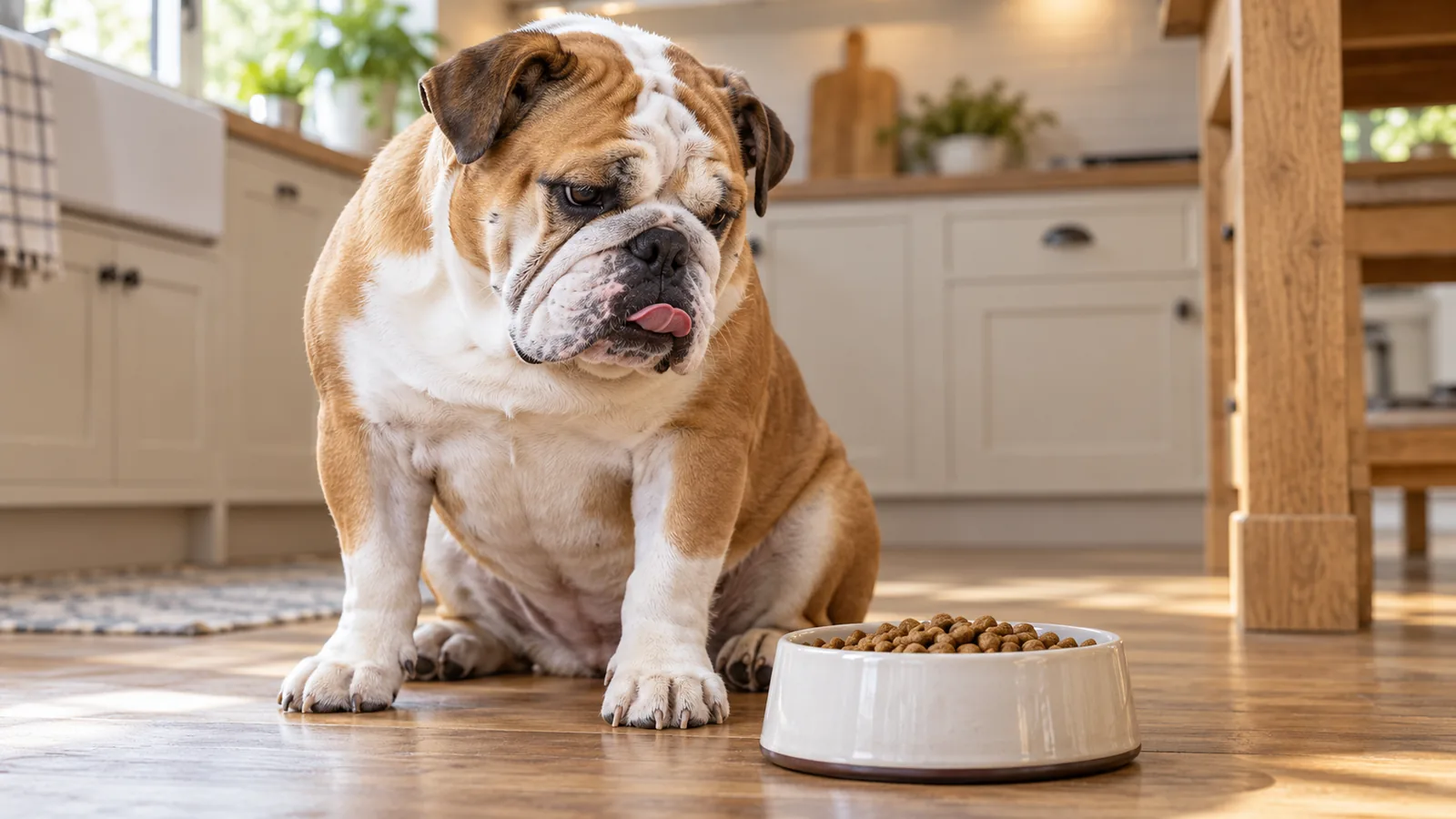
- Eating too fast: The dog who finishes before the bowl hits the floor and returns most of it a few minutes later, still in kibble shape, isn't sick, and it's common in multi-pet households and in pets who went hungry early on. The fix is in the setup: a slow feeder or one of the interactive feeders that make a pet work for each bite, separate rooms at mealtime, and smaller portions spread across more meals.
- Stress and anxiety: Chronic stress disrupts how the gut moves, and cats carry it hardest, so a move, a new baby, a strange cat outside the door, or two pets who've decided they're rivals can all keep a gut churning. Cats hide under the bed or overgroom a patch of fur bare, while a stressed dog paces, pants, or won't settle, and those signs tend to show up alongside the vomiting rather than instead of it.
Stress is what's left after the rest is ruled out, not where we start.
When Does Vomiting Stop Being Normal?
Vomiting stops being normal when it becomes a pattern, while one episode in a pet who's otherwise bright, hungry, and drinking normally usually isn't a medical problem. Add a slipping appetite or a looser stool and that's worth testing.
What Does the Color of the Vomit Mean?
What comes up, and how long after a meal, narrows things before a single test runs, so take a quick phone photo before you clean up (we promise we've seen worse). The types of vomit run from white foam to coffee grounds, and what it looks like tells us more that you’d think.
| What you see | What it can suggest |
| Yellow or green bile | An empty stomach, often first thing in the morning |
| Undigested food within minutes of eating | Fast eating, or regurgitation from the esophagus rather than true vomiting |
| Dark, coffee-ground material | Digested blood, often from a stomach ulcer, worth a call that day |
| Bright red blood | Active bleeding, worth a call that day |
| Foamy white liquid | Stomach acid and saliva, common with nausea or reflux |
Does the Timing of Each Episode Matter?
No single pattern is a diagnosis, but a week or two of notes tells us where to look first.
- Early morning, on an empty stomach: yellow bile before breakfast often points to bilious vomiting syndrome, especially in dogs.
- Right after a meal: fast eating, or regurgitation, which is a different problem from vomiting (see the FAQ below).
- With more drinking and urinating: often kidney disease, diabetes, or another illness outside the gut.
- With weight loss or on-and-off diarrhea: usually disease in the intestines themselves.
What Other Signs Mean It's Time to Come In?
Unexplained weight loss, extra thirst, low energy, or on-and-off diarrhea alongside the vomiting moves this from watching to testing. Frequent hairballs count too, because they can be less a grooming quirk and more a sign the GI tract is moving too slowly, and more than one a month is outside normal. Chronic vomiting can also be the first visible sign of senior pet health problems like kidney disease, hyperthyroidism, or liver trouble, so an older pet gets tested sooner rather than watched. Twice-yearly wellness exams help here, because a small change means more with last spring's numbers to compare.
When Is Chronic Vomiting an Emergency?
Chronic vomiting becomes an emergency when any of the signs below shows up with it, and a puppy, kitten, or very old pet who is vomiting and too weak to get up needs to be seen the same day.
- Blood: bright red streaks, or dark material like used coffee grounds.
- A swollen or painful abdomen: a belly that looks bloated, or that your pet pulls away from.
- Unproductive retching: the motions of vomiting with nothing coming up, which can mean a twisted stomach in a large-breed dog.
- Nothing staying down: water coming back up within minutes.
- Severe lethargy: a pet who won't get up, or whose gums look pale.
Never try to make your pet vomit at home, and never give human anti-nausea or pain medication, because both can make a blockage or an ulcer worse. Call ahead so we can be ready, since we see urgent and emergency cases while we're open. After hours, an emergency hospital can start care and send us the records.
If It Isn't Stress or Speed, What Else Causes Vomiting?
The rest of the causes sort into three groups: what your pet eats or finds, disease somewhere else in the body sending nausea signals, and trouble in the lining of the stomach and intestines.
Could the Food Bowl or the Trash Can Be the Problem?
Diet drives a large share of chronic vomiting, in two ways.
- What's in the bowl: Choosing the right food means separating a true food allergy, an immune reaction to a specific protein, from an intolerance, which is the digestive tract objecting to an ingredient. Switching brands every few weeks makes this harder, because nothing stays in the bowl long enough to show you the trigger. Write down everything your pet eats for a week or two, treats and chews included, and bring the list with you.
- What gets eaten on the sly: Trash cans, sidewalk snacks, goose droppings along Fort Worth's Trinity Trails, and the corner chewed off a blanket all count. Partial obstructions from gastrointestinal foreign bodies can produce weeks of on-and-off vomiting instead of the dramatic crash many families expect.
Could Disease Somewhere Else Be Causing the Vomiting?
Vomiting is a symptom, not a location: diseases with nothing to do with the stomach send nausea signals, and treating the vomiting without finding that driver buys a few good days before the pattern returns. It's why we start with bloodwork rather than a food change.
- Kidney and liver: Chronic kidney disease makes pets nauseated because waste products the kidneys normally clear build up in the bloodstream. Liver and gall bladder disease tend to show up as vomiting with a dropping appetite, sometimes with a yellow tint to the gums or the whites of the eyes.
- Hormones and the pancreas: In cats past about ten, an overactive thyroid, known as hyperthyroidism, speeds the metabolism and brings vomiting, a big appetite, and weight loss together, which is why thyroid screening belongs in senior care bloodwork. Pancreatitis, inflammation of the organ that makes digestive enzymes, causes vomiting with real belly pain, and a severe flare is an emergency.
- Adrenal glands: Addison's disease, seen mostly in dogs, means the adrenal glands make too little of the hormones the body runs on. Vomiting, a poor appetite, and low energy come and go for months and are easy to miss, and a sudden crisis with collapse is an emergency.
Could the Problem Be the Intestinal Lining?
Once bloodwork and imaging come back clean, attention turns to the lining of the stomach and intestines, where the conditions look alike and are treated completely differently.
- Inflammation: Inflammatory bowel disease is persistent immune-driven inflammation in the gut lining, and no blood test, X-ray, or trial course of medication can confirm it.
- Cancer: Intestinal lymphoma is the most common gastrointestinal cancer in cats, and its low-grade form mimics chronic inflammation closely enough that only tissue under a microscope separates the two. Gastric cancer is less common and tends to cause vomiting that worsens steadily alongside weight loss.
- Parasites: roundworms, hookworms, whipworms, and Giardia can irritate the gut enough to cause on-and-off vomiting, with or without diarrhea. A stool test finds most of them.
- Damage to the lining: Gastric ulcers, open sores in the stomach wall, can follow long-term anti-inflammatory medication or another illness, and they're the usual source of coffee-ground vomit.
- Timing and anatomy: Bilious vomiting syndrome is bile backing up into an empty stomach, classically yellow foam before breakfast, and it often improves with a bedtime snack. Pyloric stenosis, a narrowed stomach outlet more common in young and flat-faced dogs, is corrected with surgery.
Which Tests Do We Start With?
The workup starts with a hands-on exam and your account of the pattern, then baseline testing that covers the whole body before narrowing to the gut. It tells us whether a food trial is the right next step.
| Test | What it evaluates |
| Bloodwork | Kidney and liver values, blood sugar, thyroid in cats, cell counts, signs of pancreatitis |
| Urine sample | Kidney function, sugar, protein, signs of urinary infection |
| Stool testing | Intestinal parasites and bacterial overgrowth, easy to treat, easy to miss |
| X-ray, sometimes with barium | Swallowed objects, gas patterns that suggest an obstruction, organ size and shape |
| Ultrasound | Intestinal wall thickness and layering, pancreas, liver, lymph nodes |
What Does Six to Eight Weeks on One Food Look Like?
When baseline testing comes back clean, a structured food trial is the next real test. A diagnostic diet trial means six to eight weeks on one food and nothing else: no treats, no flavored chews, no licking the other pet's bowl.
Two kinds of food do this job: a novel protein your pet has never eaten, such as rabbit or venison, or a hydrolyzed protein, broken into fragments too small to trigger a reaction. Compliance is where trials fail, and a single slip puts you back at week one.
- Flavored heartworm preventives, a crumb of cheese to hide a pill, or a toddler sharing crackers.
- Over-the-counter limited-ingredient foods, because cross-contamination during manufacturing is common enough that a duck-and-potato bag can carry traces of chicken.
- A trip inside those weeks, unless you send the trial food along to boarding and ask that nobody slip your pet a treat.
Our doctors will help you build a trial that fits your household.
What Happens If the Food Trial Doesn't Work?
When a clean six-to-eight-week trial changes nothing, the answer is usually in the intestinal lining itself, and reaching it takes a tissue sample. Two routes get one: endoscopy, a camera passed down into the stomach and upper intestine, or exploratory surgery that opens the abdomen. We don't perform endoscopy here, so when a scope is the better route, we'll help arrange it with a referral hospital and go over the results with you.
| How they compare | Endoscopy | Exploratory surgery |
| How the sample is taken | A flexible camera passes down the esophagus under anesthesia and takes pinch biopsies of the lining. No incision, and recovery is usually quick. | The abdomen is opened under anesthesia so the liver, pancreas, intestines, and lymph nodes can be seen and felt, with full-thickness biopsies from several points along the GI tract. |
| What it reaches | The stomach and upper small intestine, surface layers only, so disease deeper in the intestinal wall can be missed. | The full thickness of the wall, plus organs a camera can't get to. |
| When it's the better choice | Vomiting with clean imaging, when the question is is structural issue, or if a surface sample is enough to answer the question we’re asking. | When imaging has already found something abnormal, when the diagnosis depends on full-thickness tissue, or when a mass or blockage needs to come out. |
Every patient we anesthetize at our AAHA-accredited hospital is monitored from the first injection through recovery. Which route your pet takes turns on how deep in the intestinal wall the answer is likely to sit and what the earlier imaging already showed, so our veterinarians go through that choice with you while the biopsy is still being planned and name where the sampling itself would happen and who would be doing it. You leave that visit with the date and the fasting instructions in hand.
What Do the Biopsy Results Change?
The tissue goes to a pathologist, whose report separates conditions that look the same in the exam room. Inflammatory bowel disease, low-grade intestinal lymphoma, other GI cancers, and certain infections all produce chronic vomiting and weight loss. That answer decides what comes next, because medication that calms an overactive immune system is not treatment for cancer.
How Is Chronic Vomiting Treated Once We Know the Cause?
What we treat depends on what the testing named, and most pets land on one of three paths: a gut that responds to a change in food, inflammatory bowel disease, or a disease elsewhere in the body that happens to cause vomiting.
- Food-responsive vomiting: The easiest of the three to live with, because the treatment is what goes in the bowl. Staying on it means getting the whole household aligned on treats and table scraps, rereading the ingredient panel now and then since manufacturers reformulate, and keeping the prescription diet stocked through our online pharmacy.
- Inflammatory bowel disease: Management combines medication that calms the immune response, often a steroid, with a diet that makes digestion easier. The first few months involve rechecks and dose changes, and many pets settle onto a low maintenance dose and live normally.
- Systemic disease: When kidney disease, liver disease, an overactive thyroid, or pancreatitis is behind it, treatment aims at that condition instead of the stomach, and stabilizing it usually settles the vomiting too.
Anti-nausea medication can keep your pet comfortable along the way, but it isn't a plan by itself. Keep logging episodes and weight once treatment starts, since that record shows whether the plan is working. Rechecks in the first few months are where we fine-tune the plan.
Questions Families Ask About Chronic Vomiting
Is it vomiting or regurgitation?
The two look alike and point at different organs. Vomiting involves heaving, abdominal effort, and usually drooling or lip-licking beforehand, and what comes up has been sitting in the stomach. Regurgitation is passive: food comes back up without effort, often in a tube shape, within minutes of eating. That's the core of vomiting versus regurgitation: regurgitation points at the esophagus, and the workup goes a different direction, often starting with chest X-rays. One video clip from your phone often answers this faster than any test.
Can I just fast my pet or switch to chicken and rice?
For one episode in a bright, playful pet, a short rest from food and a bland meal or two is reasonable. For vomiting that has gone on for weeks, it mostly delays the answer, and chicken and rice is neither a complete diet nor a diagnostic trial. Cats especially shouldn't skip meals: a cat who hasn't eaten in 24 hours needs to be seen, because that window alone can trigger liver trouble.
How long does it take to get an answer?
Baseline testing often points a direction from the first round of results. A food trial adds six to eight weeks by design, because that's how long the gut needs to settle before the result means anything. Biopsy results come back from the lab in days.
Let's Get Your Pet Feeling Good Again
Finding the cause can take a few visits, and much of what we find is manageable once it has a name. Bring your notes, recent weights, and any photos or videos. When you're ready to start, book an appointment at Animal Hospital Southwest, where we have been treating Fort Worth pets for more than 40 years. If you're not sure whether what you're seeing can wait that long, give us a call and we'll help you sort it out.